A lot of photographers, film makers and other sports and/or media people passed through the Carlsbad shop. In the 1980's, the surfing world was expanding quickly.The internet was making the world a lot smaller and surfers in distant places were a lot closer. The surf media, primarily surf magazines, played a big part in how surfing was presented to the world. Photos of surfing shaped the surfing world. Surf photographers from around the world stopped by the shop to pick up camera gear on the way to some far off surf destination.
In the early 80's, Alberto de Abreu Sodré from São Paulo, Brasil paid a visit to the shop. Alberto was Brasil's first "international" surf photographer, working with Fluir magazine in the formative days of Brasil's surf industry. Organized surfing was just getting started and Alberto and Fluir were an early voice. He was on his way to the North Shore of Oahu for the first time.
He had ordered some waterproof camera equipment and was planning to document the first significant visit of a group of Brasillian surfers to the big winter waves of Oahu's North Shore. This would be a huge learning experience for everyone involved as "professional" surfing became a real thing.
When a very excited and motivated Alberto showed up, I found out that when he was younger, he worked for his family business around Akron, Ohio, which is not far from where I grew up. From then on, even though we did not see each other in person all that much, we became good friends over the years. In addition to being a surf photographer, he was a businessman experienced in dealing with people from other walks of life and cultures. This helped Alberto be more than just a guy taking pictures.
Surfing as a business was just getting started in Brasil. New surfing related businesses were starting up. The problem is that some of the companies were using names and logos of companies that already existed. American copyright laws did not apply in Brasil, so it might have looked like an easy way to go. Of course, in the long run, this is a bad idea. Even worse, a Brasillian surfer shows up in Hawaii with pirated logo Lightning Bolt surfboards and boardshorts, he could get hurt.
I remember talking with Alberto about this a great deal. Brasil would not go anywhere in the surfing world stealing other company's stuff. This was a point in time where one person could make a difference. Alberto was in a position where all sides in Brasil would listen to him. After a visit to the North Shore, in with the rest of the surfing world at surfing's legendary venues, I think he realized that's what would need to happen. I know that Jeff Divine of Surfer Magazine and Carlos Lorch were also in on the discussions as well as Bruno Alves of Fluir.
In the next few years, the surf companies in Brasil developed their own style and original company designs that are Brasillian, joining the worldwide surf industry as surfing became more and more popular. I don't think many people knew about this, but a few people in different countries turned Brasillian surfing down the right road without much fanfare.
I always looked forward to seeing Alberto on his way to Hawaii. In 1988, he was looking to make Brasil's first big surfing movie. He ordered a 16mm camera and "helmet cam".
In the early 80's, Alberto de Abreu Sodré from São Paulo, Brasil paid a visit to the shop. Alberto was Brasil's first "international" surf photographer, working with Fluir magazine in the formative days of Brasil's surf industry. Organized surfing was just getting started and Alberto and Fluir were an early voice. He was on his way to the North Shore of Oahu for the first time.
He had ordered some waterproof camera equipment and was planning to document the first significant visit of a group of Brasillian surfers to the big winter waves of Oahu's North Shore. This would be a huge learning experience for everyone involved as "professional" surfing became a real thing.
When a very excited and motivated Alberto showed up, I found out that when he was younger, he worked for his family business around Akron, Ohio, which is not far from where I grew up. From then on, even though we did not see each other in person all that much, we became good friends over the years. In addition to being a surf photographer, he was a businessman experienced in dealing with people from other walks of life and cultures. This helped Alberto be more than just a guy taking pictures.
Surfing as a business was just getting started in Brasil. New surfing related businesses were starting up. The problem is that some of the companies were using names and logos of companies that already existed. American copyright laws did not apply in Brasil, so it might have looked like an easy way to go. Of course, in the long run, this is a bad idea. Even worse, a Brasillian surfer shows up in Hawaii with pirated logo Lightning Bolt surfboards and boardshorts, he could get hurt.
I remember talking with Alberto about this a great deal. Brasil would not go anywhere in the surfing world stealing other company's stuff. This was a point in time where one person could make a difference. Alberto was in a position where all sides in Brasil would listen to him. After a visit to the North Shore, in with the rest of the surfing world at surfing's legendary venues, I think he realized that's what would need to happen. I know that Jeff Divine of Surfer Magazine and Carlos Lorch were also in on the discussions as well as Bruno Alves of Fluir.
In the next few years, the surf companies in Brasil developed their own style and original company designs that are Brasillian, joining the worldwide surf industry as surfing became more and more popular. I don't think many people knew about this, but a few people in different countries turned Brasillian surfing down the right road without much fanfare.
I always looked forward to seeing Alberto on his way to Hawaii. In 1988, he was looking to make Brasil's first big surfing movie. He ordered a 16mm camera and "helmet cam".
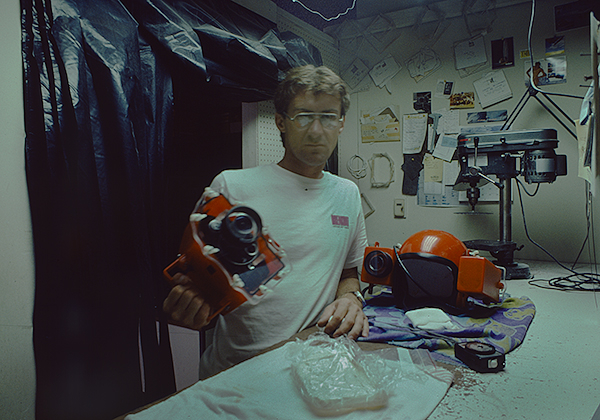
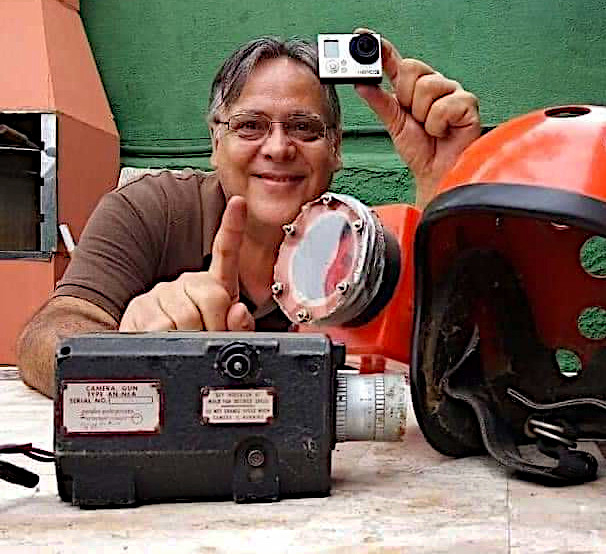
Long before GoPro type "action cams", we were experimenting with POV(Point Of View) imaging for surfing and sailboarding. Alberto's setup was as small as I could make it at the time, but the helmet camera setup was heavy. Made from a World War II fighter plane wing camera, it needed heavy batteries. In the photo at the top of this page, Alberto shows just how far we have come.
Over the years, the young guys took over and Alberto and I were now just Facebook friends. The surf trips were more like family vacations with his wife, Rebeca, and their three lovely daughters. He told me he had to wear the same clothes for days because the women had dumped everything out of their suitcases so they could fill them up with cosmetics they couldn't get at home, so he still looked like a surfer. Alberto's photos changed from surfing to Formula One and yachts, putting his business skills to use once again.
I didn't hear from Alberto all that much, but during the COVID pandemic, I could tell by his Facebook page that something was wrong. Alberto had passed away rather suddenly at the age of 61. I thought it was COVID, which was killing millions at the time, but it turned out to be complications from a previous surgery.
Alberto is one of the founders of modern Brasillian surfing. Working with Fluir and Hardcore magazines in Brasil and Surfer in the United States, his photos will be the historical foundation of surfing in Brasil. Known respectfully as "O Cação", the shark or "cátion", legend, he was a energetic, positive person and a good friend.
I didn't hear from Alberto all that much, but during the COVID pandemic, I could tell by his Facebook page that something was wrong. Alberto had passed away rather suddenly at the age of 61. I thought it was COVID, which was killing millions at the time, but it turned out to be complications from a previous surgery.
Alberto is one of the founders of modern Brasillian surfing. Working with Fluir and Hardcore magazines in Brasil and Surfer in the United States, his photos will be the historical foundation of surfing in Brasil. Known respectfully as "O Cação", the shark or "cátion", legend, he was a energetic, positive person and a good friend.
All material on this website is the property of the owner and may not be used without permission.
© ronbarbish.com
© ronbarbish.com